
Listen closely: the streets of cities and towns are once again alive with the sound of clomping on the sidewalk. Careful, do not confuse this trotting for horse hooves… we left carriages in the last century. These “hooves” are none other than tabis.
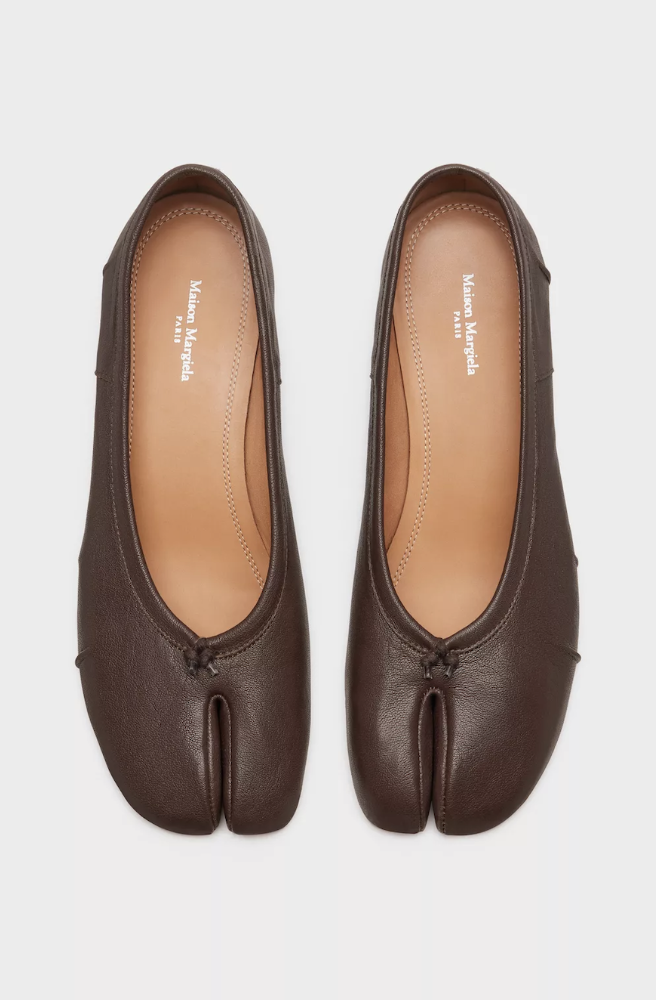
Photo from Maison Margiela
For those who may be unfamiliar with tabis, these are shoes designed with a split seam that separates the big toe from the rest of the foot, vaguely resembling an animal hoof. It’s true—art imitates life—and fashion design is no exception. Like all art, the tabi is subjective, ever-changing, and at times, contested.
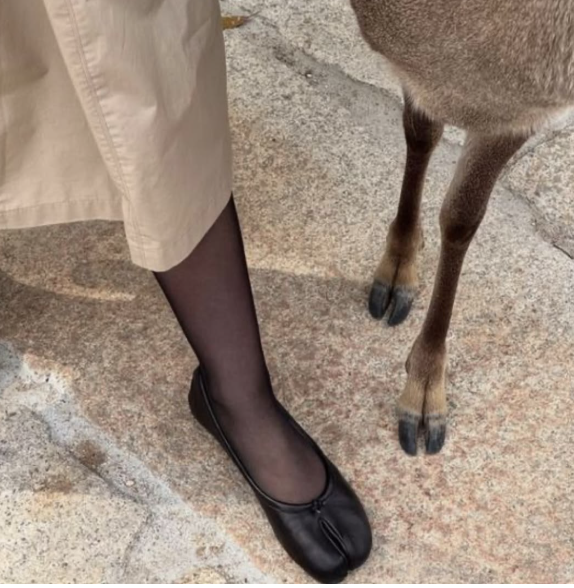
Photo from Pinterest
Tabis may be the biggest, most unique trend in footwear of the year—maybe even of the decade. Seemingly overnight, tabi-style mules, ballet flats, and other variations appeared on the feet of high-fashion individuals, models, and influencers, leaving a controversial mark on the greater fashion industry. In its split-toed nature, the shoe has divided audiences into the pro-tabis, the anti-tabis, and, additionally, left a large crowd in a grey area of indifference or skepticism.
Proponents of the tabi love its unique shape and defend its comfortability; opponents feel uneasy or disturbed at the thought of going about their daily lives wearing “hooves.”
The modern tabi style was launched in 1989 by Belgian brand Maison Margiela, and is seen today on red carpets and on the fashion-forward streets of major cities like New York and London. Margiela’s distinct, high-quality footwear has become a signature look for the brand. The shoe itself is high-concept, and the price tag is high, too: Margiela sells its distinct styles at a minimum of $1,050.
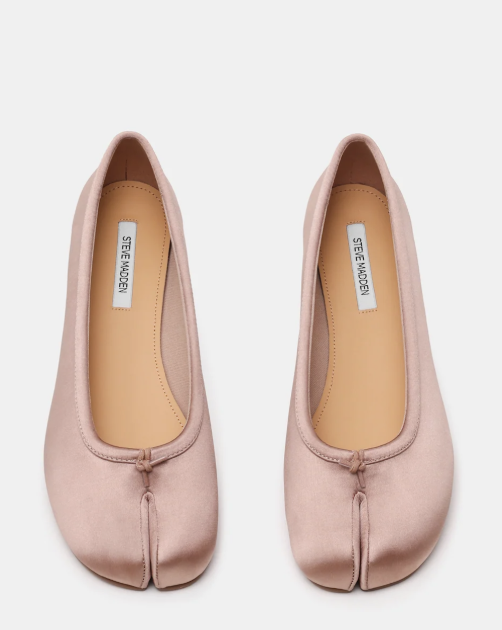
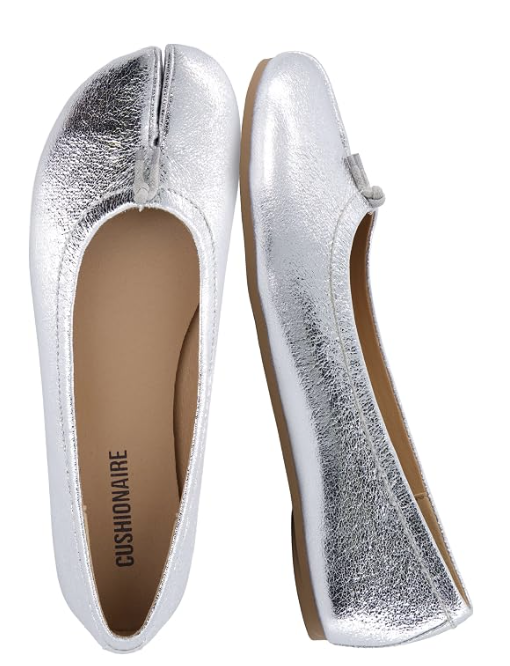
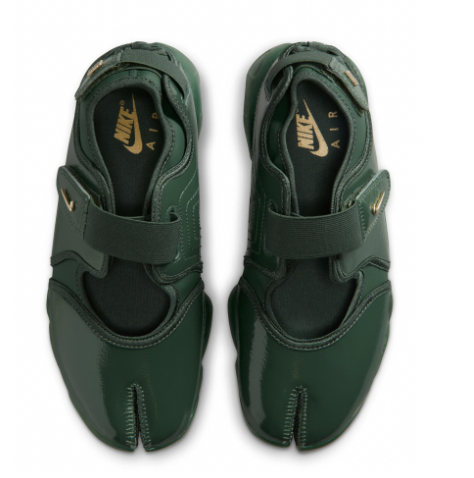
Photos from Steve Madden, Amazon, and Asos
The modern tabi has an artsy, affluent connotation. As its popularity has skyrocketed, the tabi has become increasingly accessible to consumers who are unwilling to spend a thousand dollars on the statement piece. Cushionaire, Steve Madden, Walmart, Nike, and many more brands, with differing consumer bases, have produced versions of the tabi in eye-catching colors, patterns, fabrics, and styles.
While the tabi may seem like a futuristic, evolving style that has only recently taken root, in truth, it has a rich, cultural history that precedes all of the branded, trendy versions.
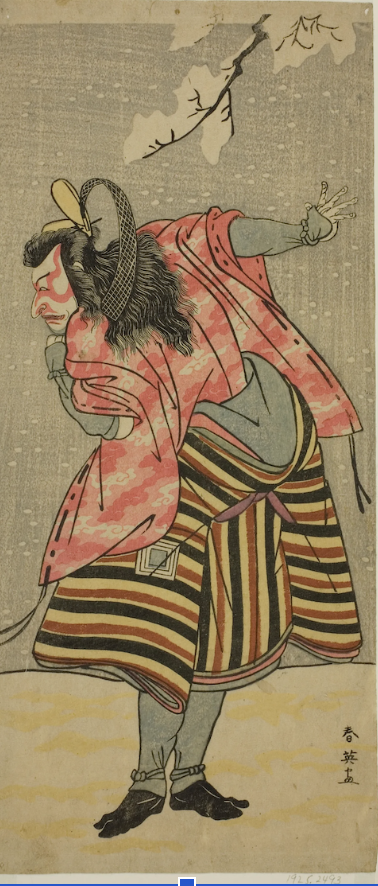
Photo from Teen Vogue
Tabi translates to “travel” in Japanese, and originates as far back as the year 800 C.E. The tabi was first and foremost a foot covering, like a traditional sock, that was typically worn with split-toe sandals or raised shoes called zori and geta. The socks were prominent among upper-class men and women, who preferred not to show their bare feet in high society, and often paired with kimonos and formal attire. Worn in teahouses, theaters, and at gatherings, tabis often replaced the wear of sandals altogether during indoor events.
Fast forward a few centuries, tabis meant more than social class distinction or household comfort and became a crucial part of Samurai uniforms. A few more centuries forward, the dynamic form of footwear was adopted by workers in dust, dirt, and debris. The tabi provided balance in its unique shape, offering stability as well as a soft sole whose barely-there structure gave the effect of being barefoot, while still offering protection.
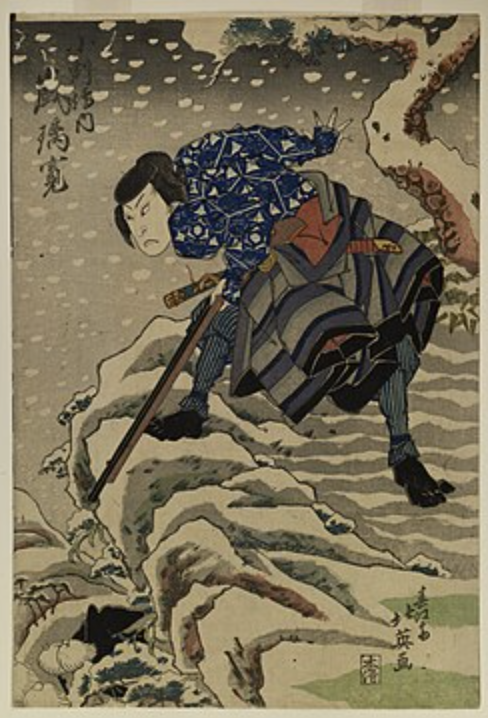
Photo from Wikipedia
As soon as the tabi stepped outdoors, its structure evolved—and it has continued to do so ever since. Tabis for farmers required more traction and resistance to weather, and soon their textiles transitioned from sock-like fabric into rubber and tougher materials for the great outdoors and industrial settings.
Centuries later in the West, the split toe design found its way into the world of sports. In 1951, runner Shigeki Tanaka won the Boston Marathon wearing Onitsuka tabi-style sneakers.
Last but not least, the tabi put its foot in the door of the world of fashion.
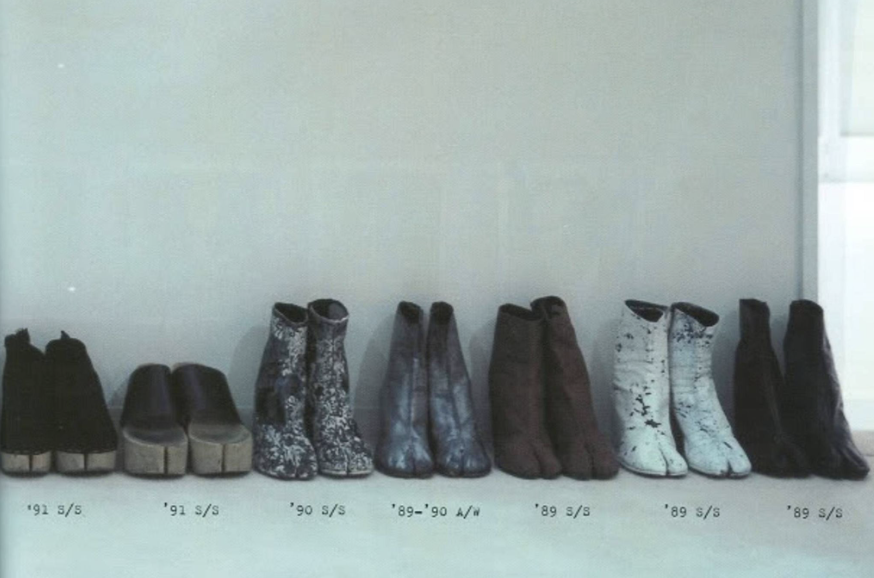
Photo from Wrong Weather
In 1989, Margiela paid homage to Japanese fashion history and stunned crowds in Paris by debuting tabi boots on the spring runway. The models not only strutted down the stage in tabis—their soles were also drenched in red paint, leaving an iconic mark.
After Margiela’s signature look, the tabi’s next major movement picked back up in 2023, following the online circulation of a dating anecdote about a woman who lost her beloved pair of tabi flats to the hands of a Tinder-date tabi thief. Its resurgence has been surprising, yet contested.

Photo from Pinterest
In the past few years, the tabi has evolved from a high-fashion statement into a quotidian shoe choice. Against all odds, the odd-looking shoe is an exceedingly common household accessory. Despite controversy over the appearance of tabis, many celebrities stepped onto red carpets at the turn of the century. Dua Lipa, Cardi B, Pedro Pascal, and Michael B. Jordan are a few notable names who have flaunted the tabis in Hollywood.

Photo from GQ Magazine
Fashion is all about experimentation and expression. From sturdy hiking-boot tabis to corporate tabi-loafers, the tabi is certainly a flexible design—the only issue is, most people are not quite flexible enough to socially accept tabis. The trend is still shifting in its universality and force of influence—but its contentious reactions may never cease. Most will likely remain reluctant to add a pair to their own shoe rack, and that’s okay: tabis are certainly not everyone’s cup of tea.
Tabi, or not tabi? Hamlet’s question still remains…
