Emerald Fennell’s ‘Wuthering Heights’ Doesn’t Exist in the Time-Space Continuum, But That’s Kind of the Point.
If you haven’t seen Wuthering Heights yet, my assumption is that you are either a die-hard fan of the book who's staying away from modern adaptations, you are scarred from reading it in AP Lit, or you simply haven't made it to the theatre yet. Whatever the reason, I recommend buying a ticket to your local AMC this spring break because this film is made to be seen on the big screen.
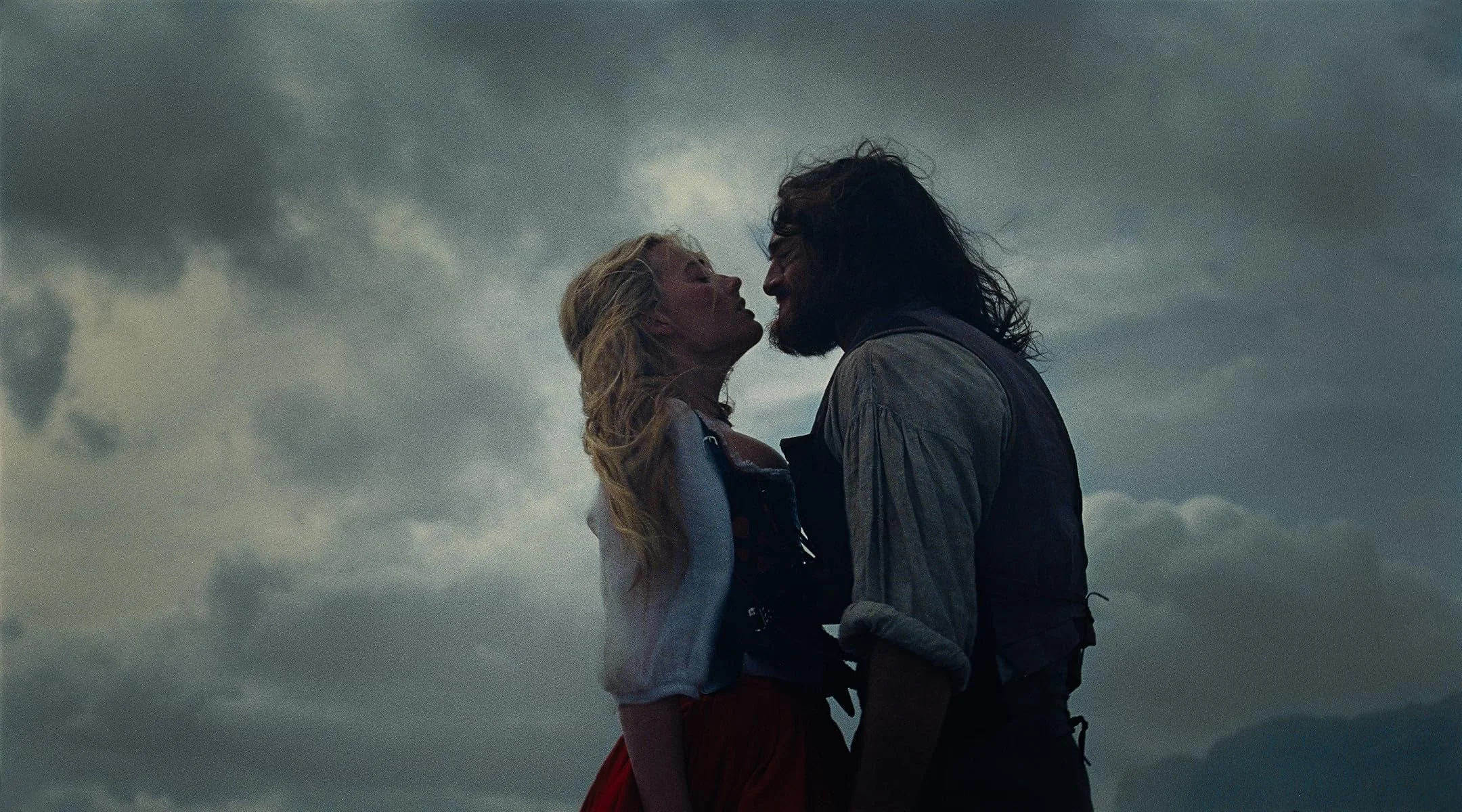
Emerald Fennell’s adaptation is based on how she read it at 14, a version shaped by her teenage perspective she now claims “isn’t quite real”. This young teenage perception of the book shifts the interpretation away from strict historical accuracy and toward feelings and fantasy, transforming Brontë’s Georgian Gothic Classic into something dreamlike and deliberately stylized. In Fennell’s adaptation, the moors are darker, the emotions louder, and the costumes just that much more saturated. Fennell’s Wuthering Heights doesn’t seem to exist in any fixed year, decade, or even aesthetic movement. It floats between centuries, sitting in the past but also borrowing from the future. This allows the film to feel less like a period piece and more like a teenage girl's maladaptive daydream of a Gothic 18th-century fantasy, filled with exaggeration and visual intensity.
Set Design:
When I went to see this film, I expected to see a tragic, layered love story. The selfish yet magnetic Cathy, the brooding Heathcliff, and a romance so intense it borders on obsession. And while the film delivered on all of these aspects, what stayed with me after the credits rolled and I finished my car ride home debrief (because wow, that was a lot) were the visuals.
The beauty of the dark English moors, with fog rolling across them lavishly, and the extravagance of the Linton Manor, made it all feel like a fantasy land.
The moors, which serve as a consistent setting throughout the film, don’t represent one period of time but instead are seen as mythic. The dramatic lighting, the wind-kept grass, and the stormy skies, leaving fog below, create a mood that is wild, romantic, and untamed, mirroring the intensity of the characters rather than historical reality.
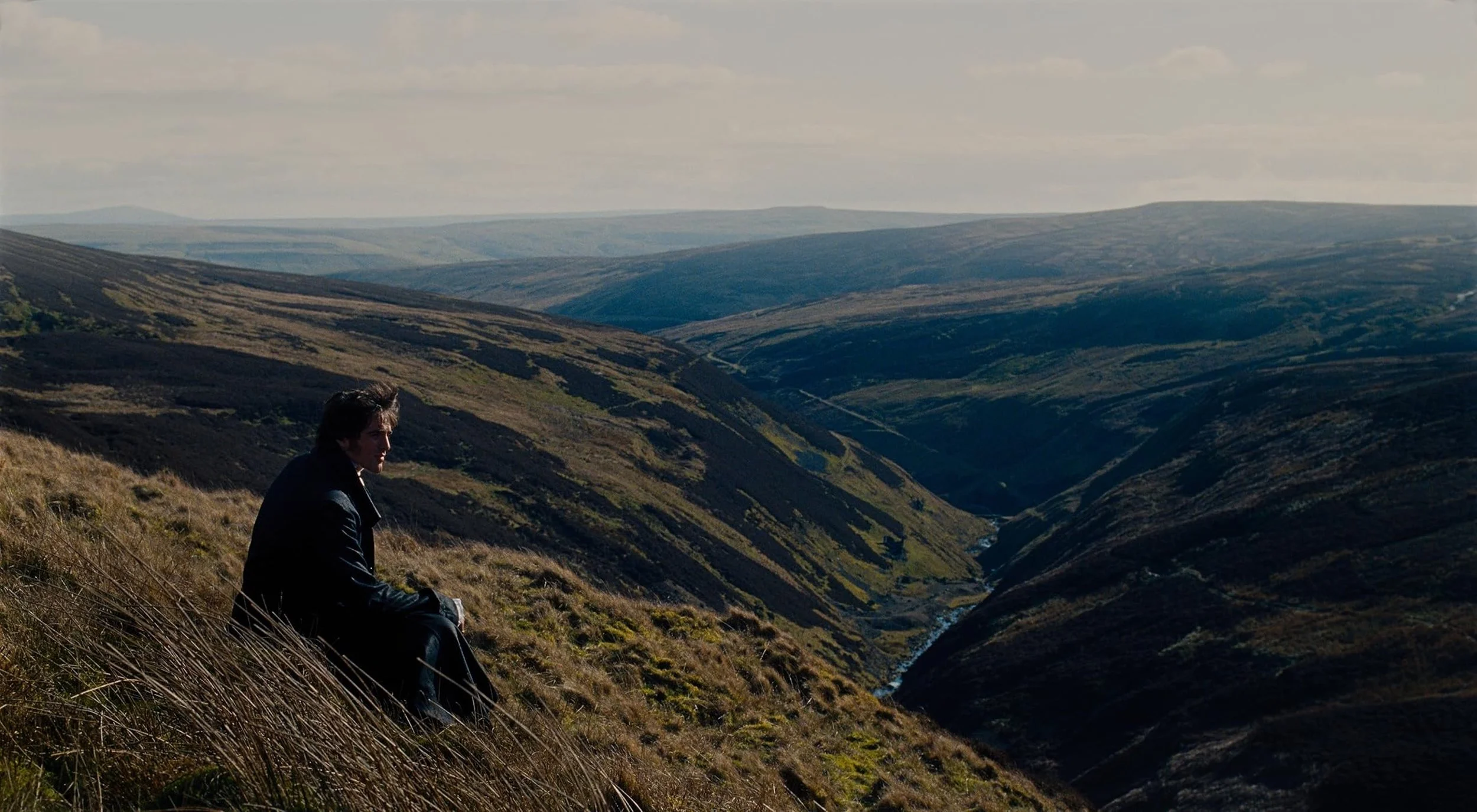
In the same vein, the Linton Manor doesn’t resemble an 18th-century Yorkshire estate. When it first hit the screen, my mind immediately went to Alice and Wonderland, a location and moment in time we cannot place. It feels Rococo Era romantic, with a scene practically mirroring The Swing, and reminiscent of a Cotton Candy Marie Antoinette set. To add to this feeling of magic, when Cathy marries Mr. Linton, he gives her a bedroom with ‘skin walls’ as they are the perfect color, that of her face. Beyond uncanny if you ask me, but this definitely adds to this effect of a fantasy universe where your skin can be the walls—this setting is beyond unrealistic and theatrical.
Costuming:
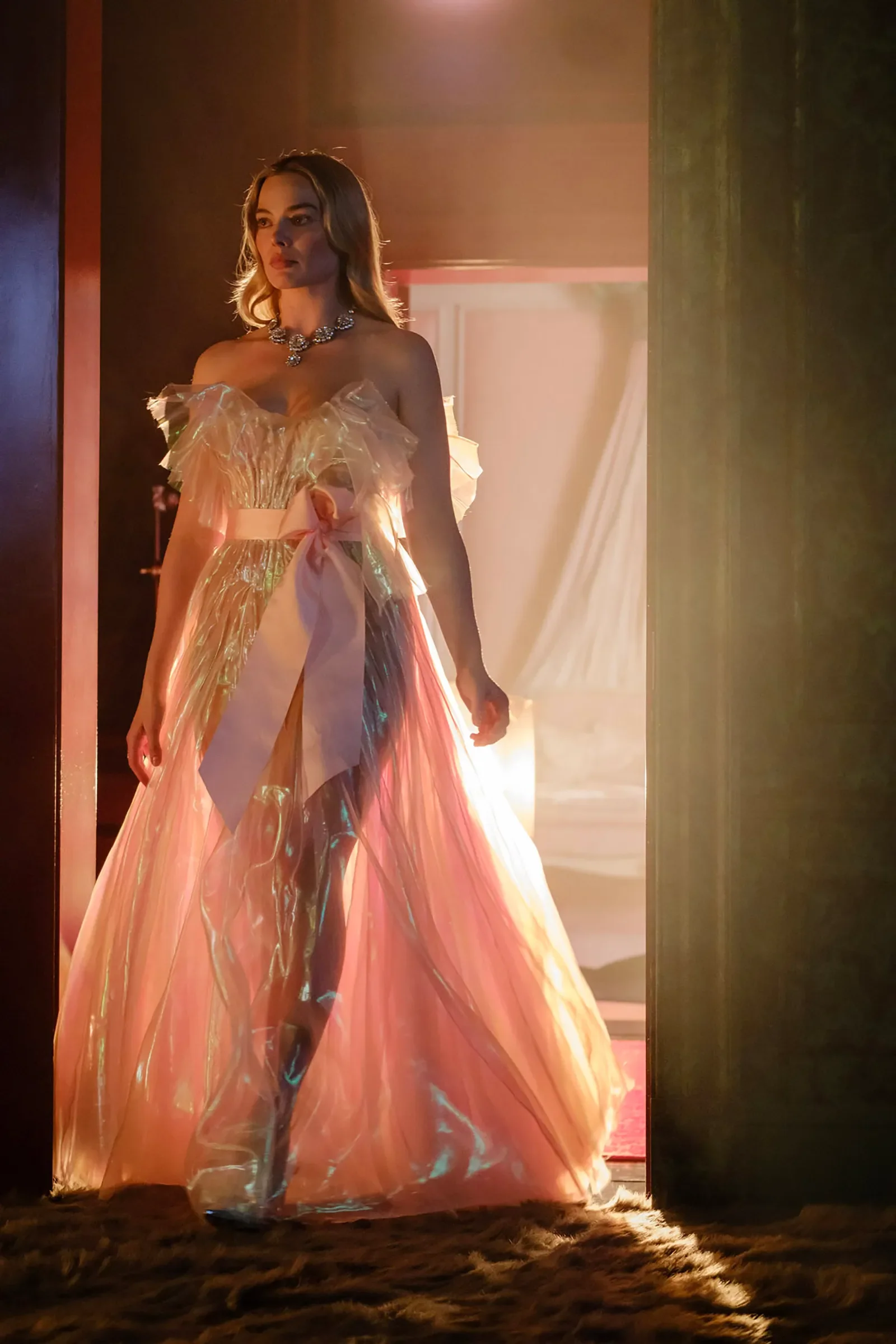
With a screen time exceeding an embarrassing number of hours, I have been following the discourse of costuming for this film, not knowing how it was going to turn out, for months. With each still Deuxmoi posted, I became more and more confused, yet intrigued by the attire the cast wore while filming. Watching it all come together on the big screen, it all made sense. It was clear that Fennell’s use of Jacqueline Durran, a two-time Oscar winner for costume design, was in full effect.
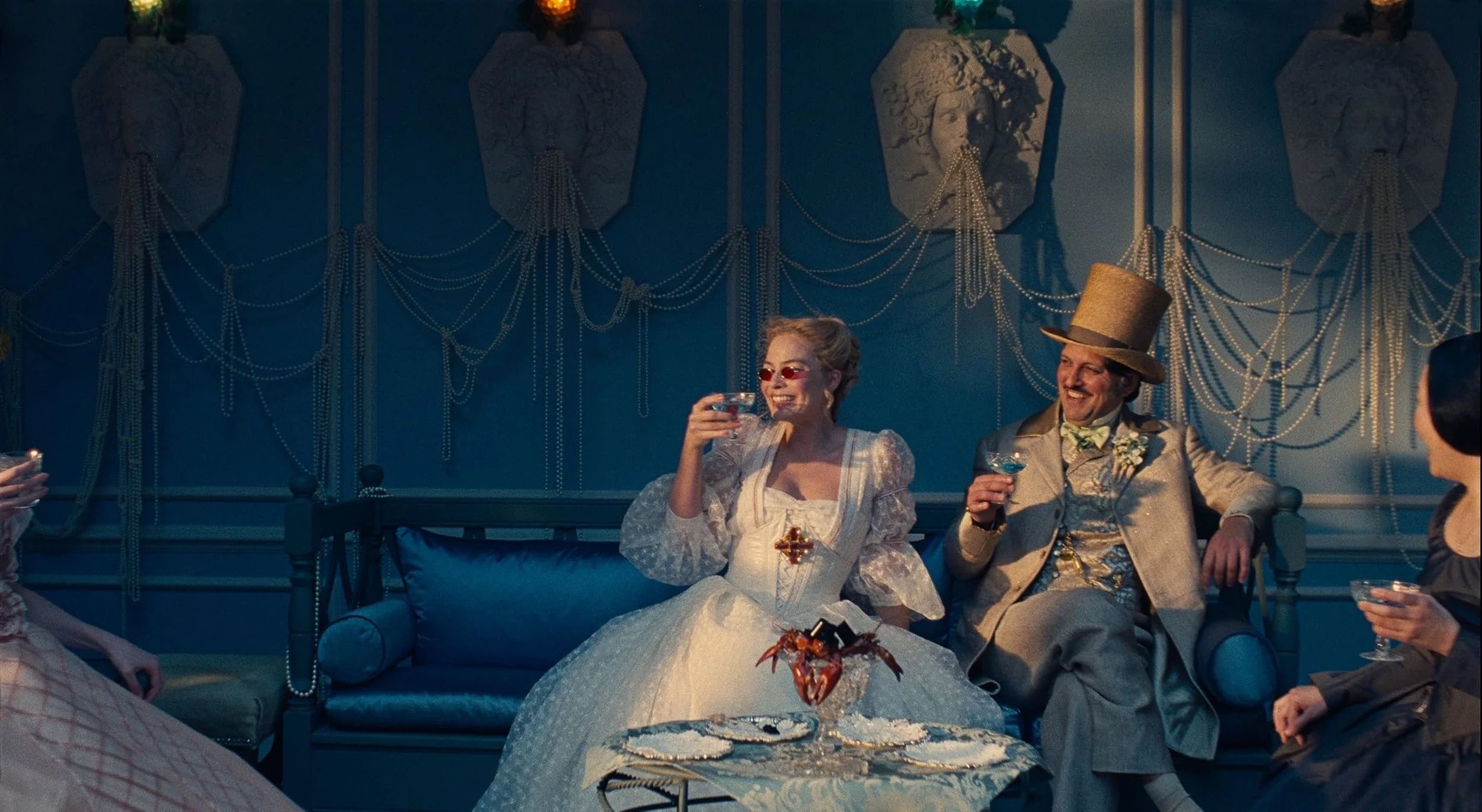
With the original story’s base being in Georgian times, Durran doesn't stop there—pulling from Elizabethan portraits and Victorian silhouettes to 1950 melodramas and contemporary trends, she is able to create a fantasy wardrobe that brings the audience out of any time period and into this daydream.
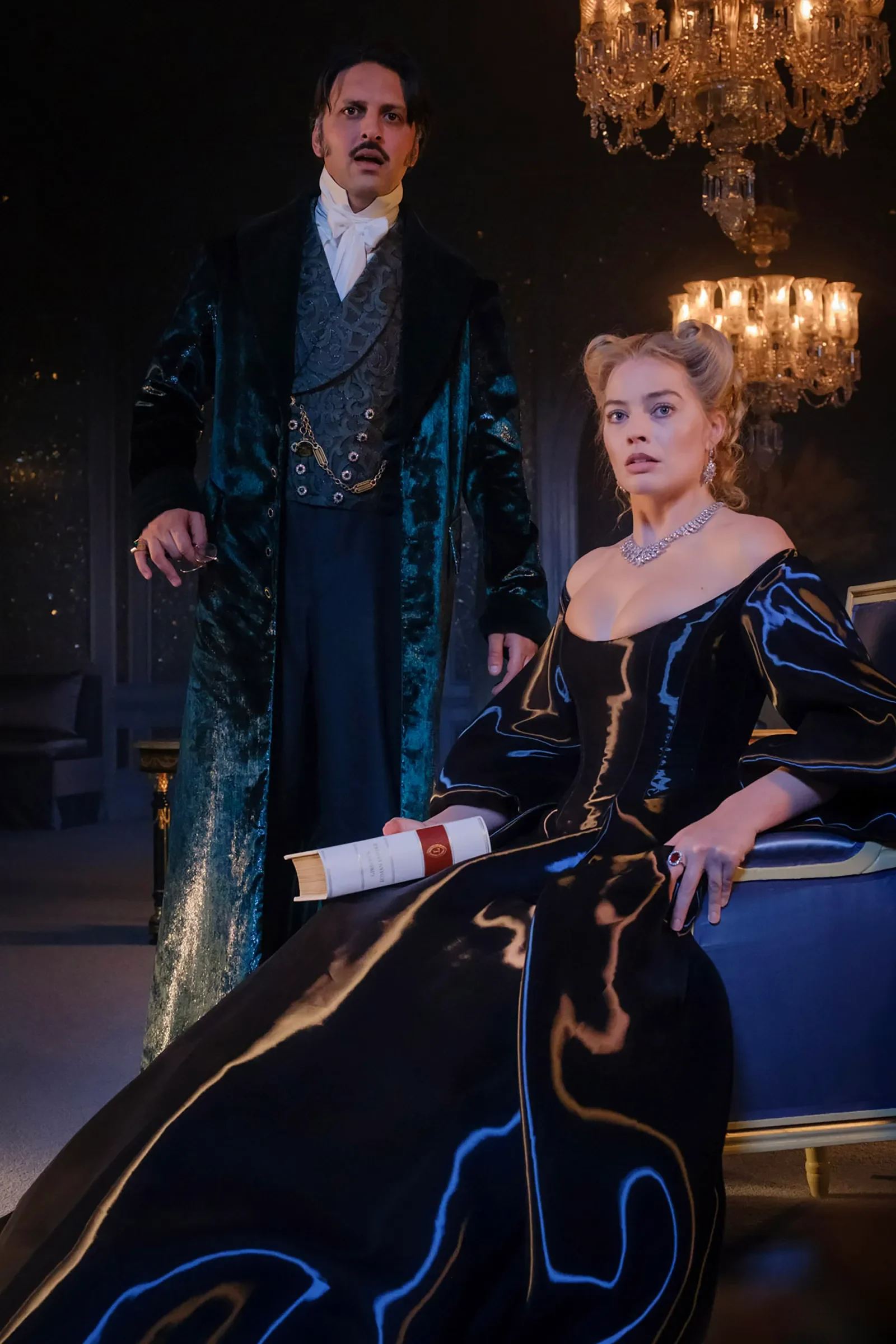
For some context, classic Georgian fashion (1714-1830) focused on structure and elegance using muted palettes and matte fabrics such as wool, cotton, and velvet, with no jewelry and minimal sparkle. This is quite the opposite of what we see in the film. Instead, Durran put our blonde, blue-eyed Cathy into almost 50 outfits, with no commitment to the gothic trends most adaptations would use. We saw Cathy hit many decades, with her wardrobe ranging from milkmaid corsets that looked like the outfits all the study abroad girls wear at Oktoberfest (people were really upset about this one), to contemporary sunglasses (random but chic), and, most of all, large, embellished dresses. Her gowns were lavish and exuberant, with one looking like it was made of cellophane, representing her as a present to another, being black and shiny, with a Victorian silhouette and modern shine. If these outfits couldn’t get any better, Cathy can normally be seen pairing one of these gowns with a large statement necklace borrowed from Chanel. These dresses and jewelry do not fit at any point in time; instead, build this fantasy land of an adolescent girl dreaming of the most perfect gown topped with the biggest necklace.
Contrasting Cathy, for the most part, Heathcliff’s costumes are much more historically accurate. We often see him in dark colors, a classic romantic-hero white shirt, and a long black coat. But even he gets lost in time through accessories like his gold tooth and single gleaming gold earring, small details that feel less like realism and more like the visual shorthand of a teenage fantasy brooding hero.
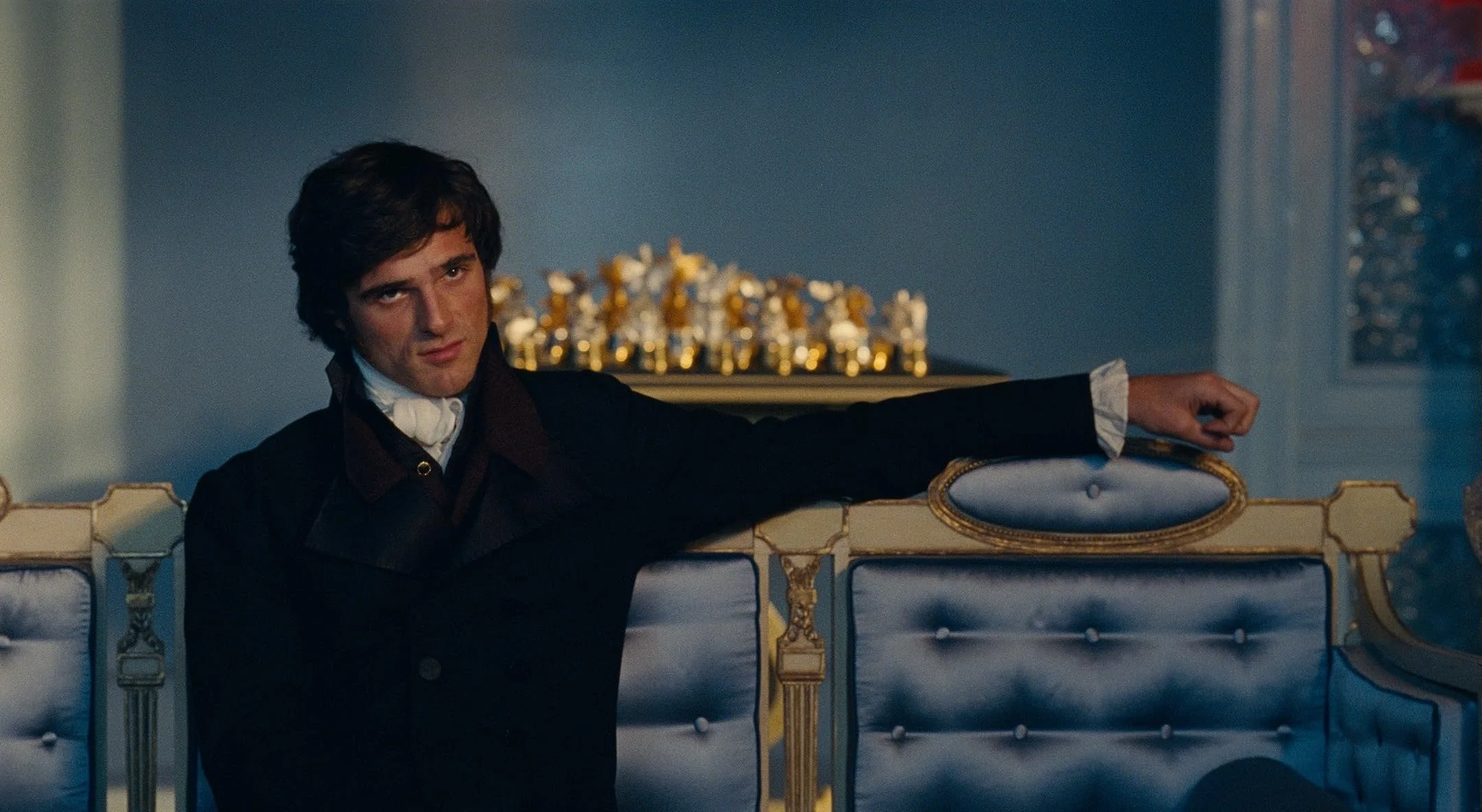
Together, the costumes refuse to belong to any century. They exist in their own time in this dream where Georgian silhouettes meet mid-century drama and contemporary shine, suspending Fennell’s world.
Music:
The film’s ambiguity in time doesn't stop at the visuals; it pulses through the soundtrack as well. Charli XCX’s bass-heavy soundtrack, which trails key moments throughout the film, reinforces this lack of realism and historical accuracy.
Utilizing Charli’s contemporary sound pulls the film even further into its own dimension. What makes her such a perfect fit for this film is how her sound feels both modern and like its own genre. Charli’s music exists in its own space, blending electronic beats with vulnerable lyrics. Charli is able to create an emotional soundscape that amplifies feelings. Her music is not only there in the background of scenes but also heightens them, adding to the film's intensity, extravagance, and dreamlike quality.
As you sit through the film, you may even find yourself asking—is Cathy having a Brat Summer?
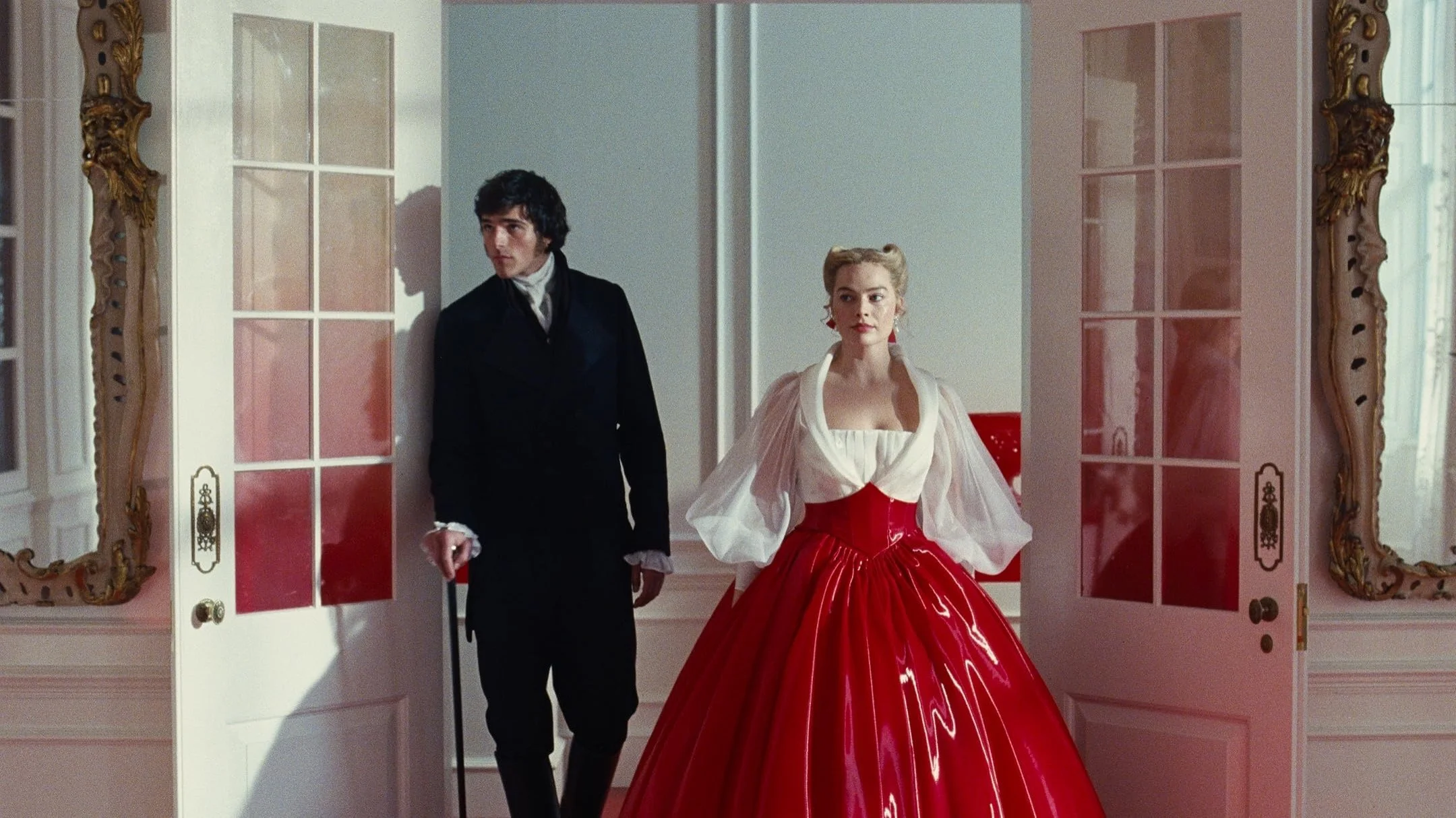
Emerald Fennell’s Wuthering Heights doesn’t want to recreate history; instead transforms it into fantasy. Through intense landscapes, impossible interiors, glamorous costumes, and a distinctly modern soundtrack, the film exists outside of any single era. If your next week is looking less like Spring Breakers but more like Track 10, and you also bark for Jacob Elordi, I’d say go check it out.
Quotes from Rotten TomatoesResearch from Vogue, InStyle, & Elle